
I have been home for many months since this expedition cruise and have had time for reflection and I can honestly say this trip was as if custom made for me. It had the perfect combination of active elements – particularly emphasizing my love of nature, tons of exciting wildlife exposure, more beautiful than can be believed vistas, plenty of opportunity for photography, great food, friendly and helpful staff and co-travelers. My cabin was spacious and well equipped. There was also ample (for me) personal time, to either find a nook to read a book, uploading, collating my photos – or just staring out at the ocean. I thoroughly enjoyed the daily lectures and learned so much. Most importantly I never felt that anything was mandated – I could decide that a planned Zodiac/beach landing was not for me (ie just hanging out sunbathing on the sand which I no longer do) or on occasion to just order a light room service dinner rather than going to the dining areas. This was ideal.
Of course, every trip has its WTDGAP (When Things Don’t Go As Planned moments) but thankfully no injuries:
OCD FAIL: My friends know that I am a “bit” obsessive-compulsive – overthink, overplan, overorganize. However, despite checking my necessary documents many, many times. for this trip I still messed up. I had my passport, visas for both Tanzania and the Seychelles – the latter being one of the prettiest visas I have ever received:
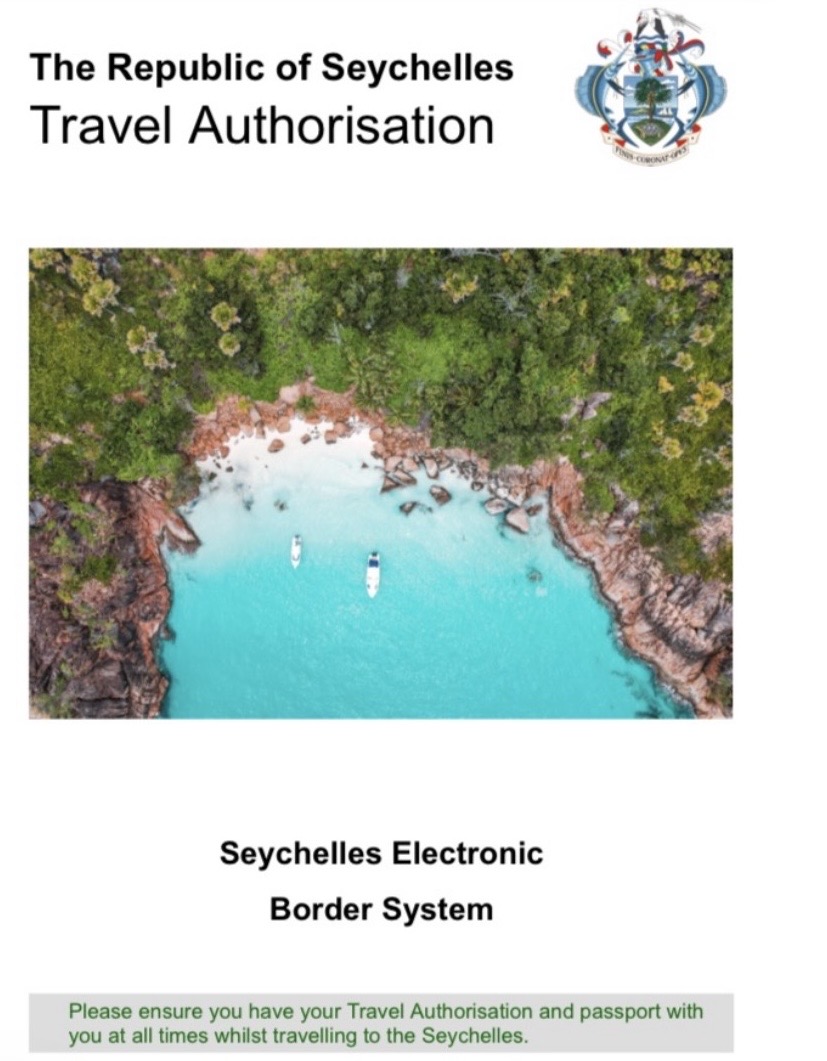
I also had gotten a travel insurance policy which was required for the trip – since I was going to be in a very remote area, this would help with emergency evacuation in case of sickness or injury, etc. I used a colored manila folder to house the documents for easy access and kept it in my carry-on, except for the travel policy which was voluminous, since I expected it would be checked upon boat embarkation, I could retrieve it online. However, in order to enter the airport terminal in Zanzibar (landing was on the tarmac, not internal) proof of travel insurance also had to be shown. OK – except, I hadn’t a hard copy and I could not get wifi to access the internet. While all the other plane passengers showed their insurance and passed through the door, I was standing on the other side with my heart pounding and my hands literally shaking. The officer was very patient and finally I remembered I had made a photocopy of the policy’s front page and had that in my phone’s photo library- which was accepted – WHEW! I guess my OCD did save me in the end.
WALK OF SHAME – This journey included many exciting snorkeling activities, using the Zodiacs as our diving platforms. Once we arrived at the snorkeling sites, we removed our shoes, hats, etc put on our flippers and masks, stored our land gear, sunblock, water bottles, etc. in our wet bags. and jumped into the ocean. More than once, when it was time to return to the Zodiac, I had swam well beyond my particular Zodiac and had to climb aboard whatever was nearest, Not a big deal since all Zodiacs went back to the same ship – but I had no way of knowing which Zodiac held my gear so I had to walk barefoot back to my cabin until all zodiacs were emptied to be able to retrieve my wet bags. Walking barefoot in the ship is frowned upon but I am sure I was not the only one.

All in all, a spectacular trip.
My next journey is already secured, and I have already make hard copies of EVERYTHING. More on this down the road.
Enjoy the rest of your summer!
#